Fundamentals of Musical Composition
Arnold Schoenberg
Arnold Schoenberg (1874 - 1951) was an Austrian and American music theorist and composer who was a central figure in the Second Viennese School along with his students, Alban Berg (1885 - 1935) and Anton Webern (1883 - 1945). Schoenberg is most recognized for developing the twelve-tone technique of atonal music.
Literature
Fundamentals of Musical Composition offers a clear description of musical form at a variety of scales that can be useful guides for improvisation. In short, simple ideas, or motifs, are expanded into themes and melodies, which are then juxtaposed with contrasting themes and melodies to develop larger, more complex forms. The book culminates in a description of sonata form which, along with other traditional musical forms, can be used as a guide for more complex works.
Repertoire
Schoenberg
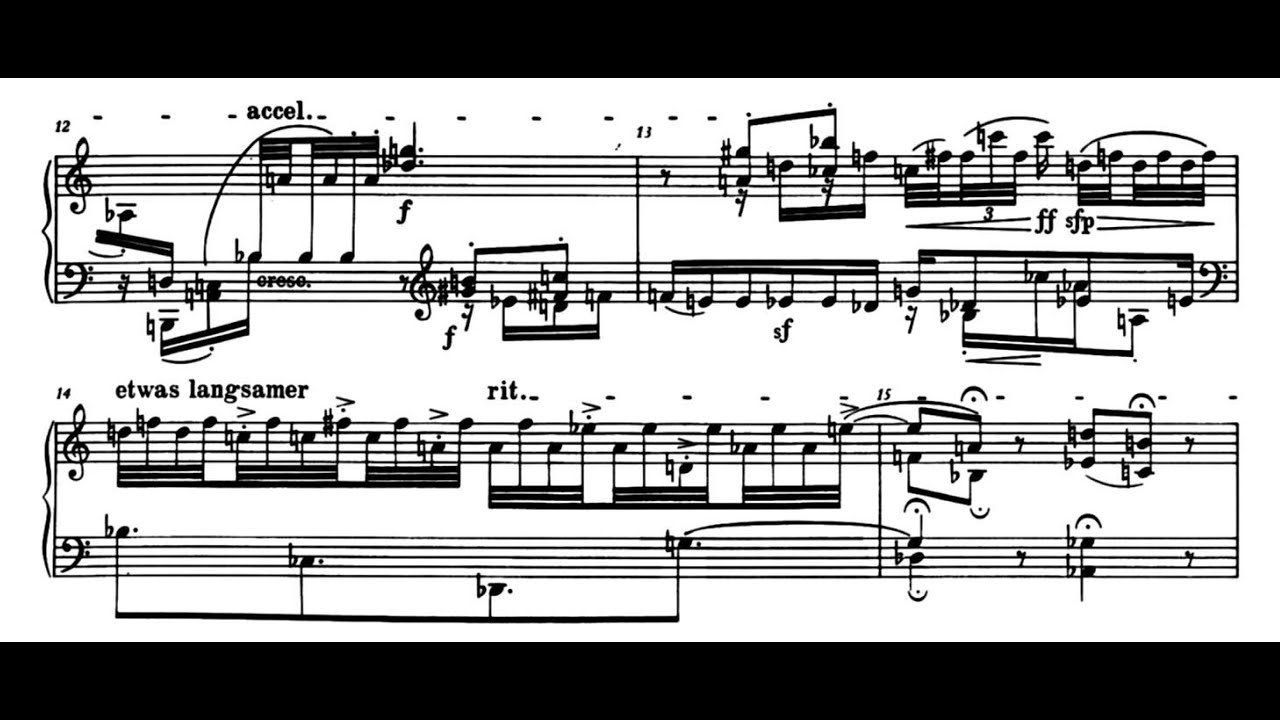
Suite for Piano, Op.25
Completed in 1923, the Opus 25 Piano Suite is an early example of Schoenberg’s twelve-tone style, in which he utilized the row alongside free atonality.
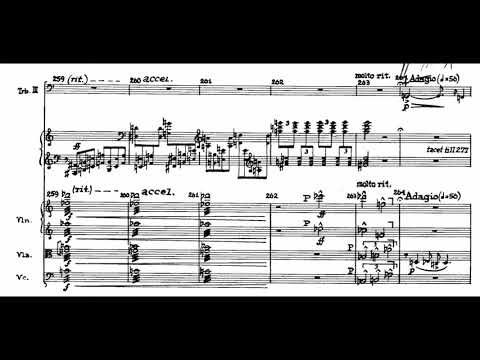
Piano Concerto, Op. 42
Schoenberg’s later works, such as the 1942 Piano Concerto, Op. 42, demonstrate a more systematic approach to the twelve-tone technique.
Stravinsky
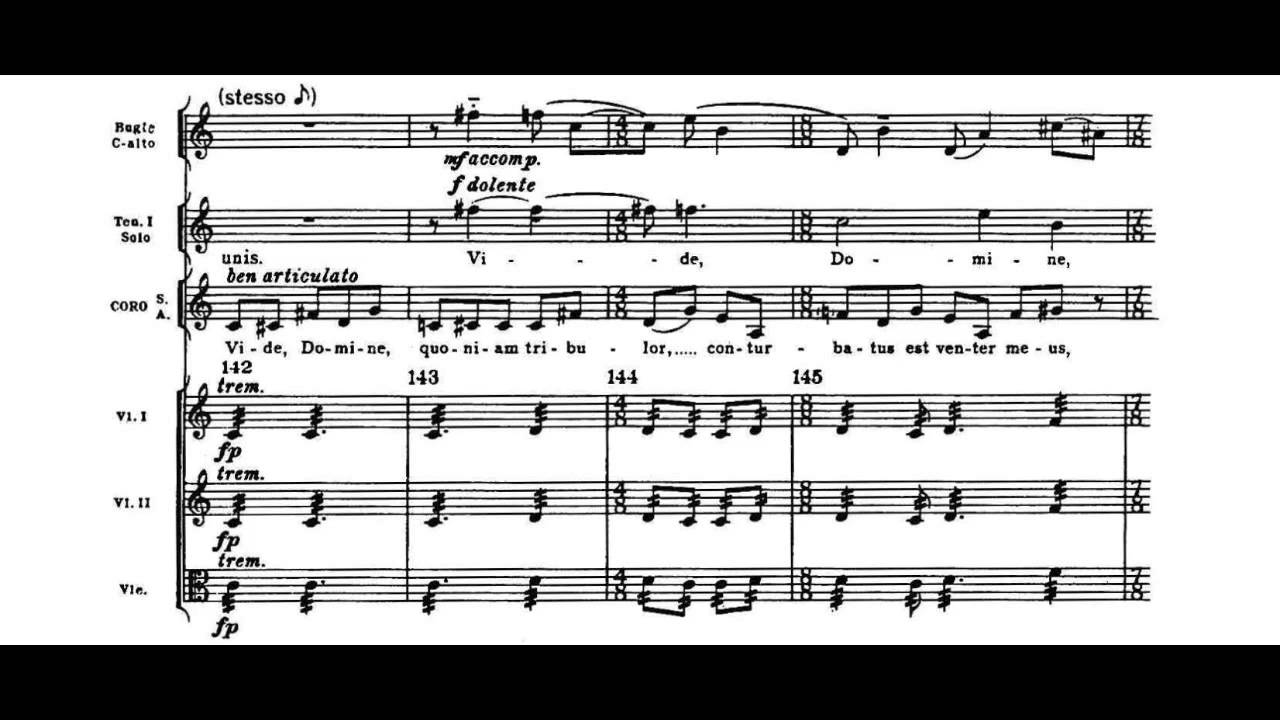
Canticum Sacrum
The second movement of Igor Stravinsky’s (1882 - 1971) Canticum Sacrum (1955) was his first piece entirely based on a twelve-tone row.
Boulez
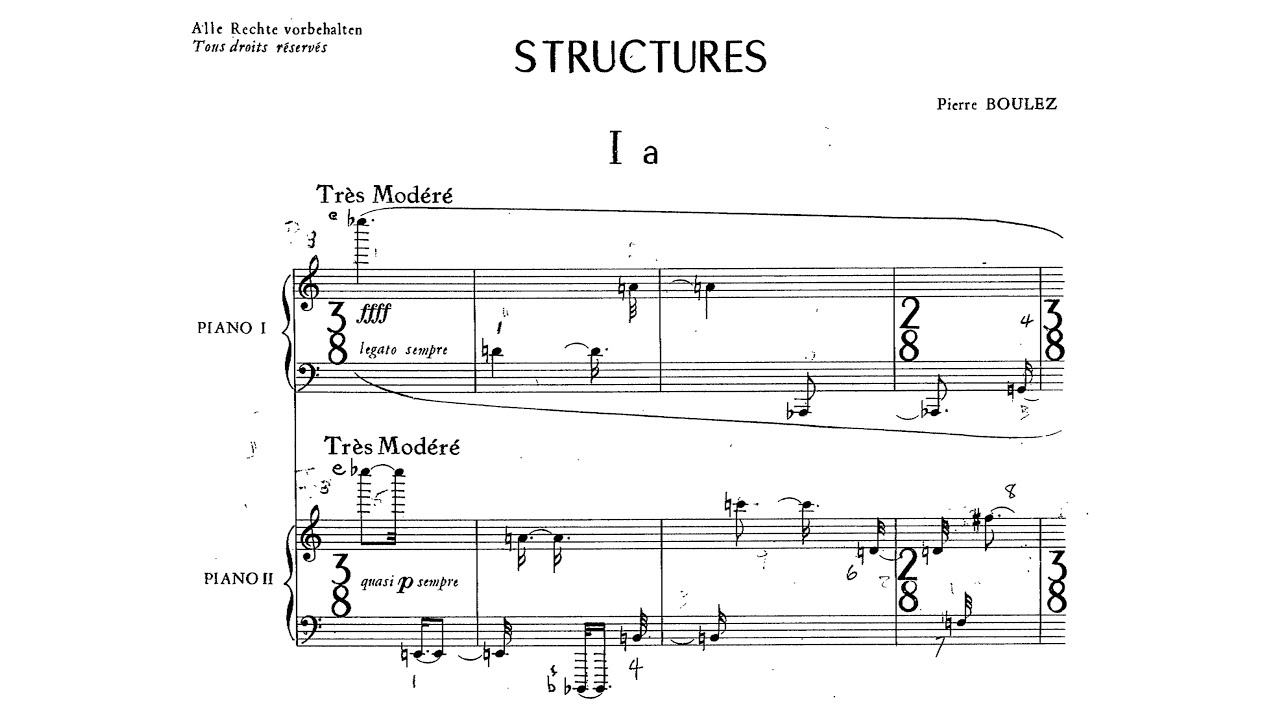
Structures I
Pierre Boulez (1925 - 2016) expanded on the twelve-tone system through serialism, which used the ratios of the row to derive a matrix that determines all aspects of the composition.
Babbit
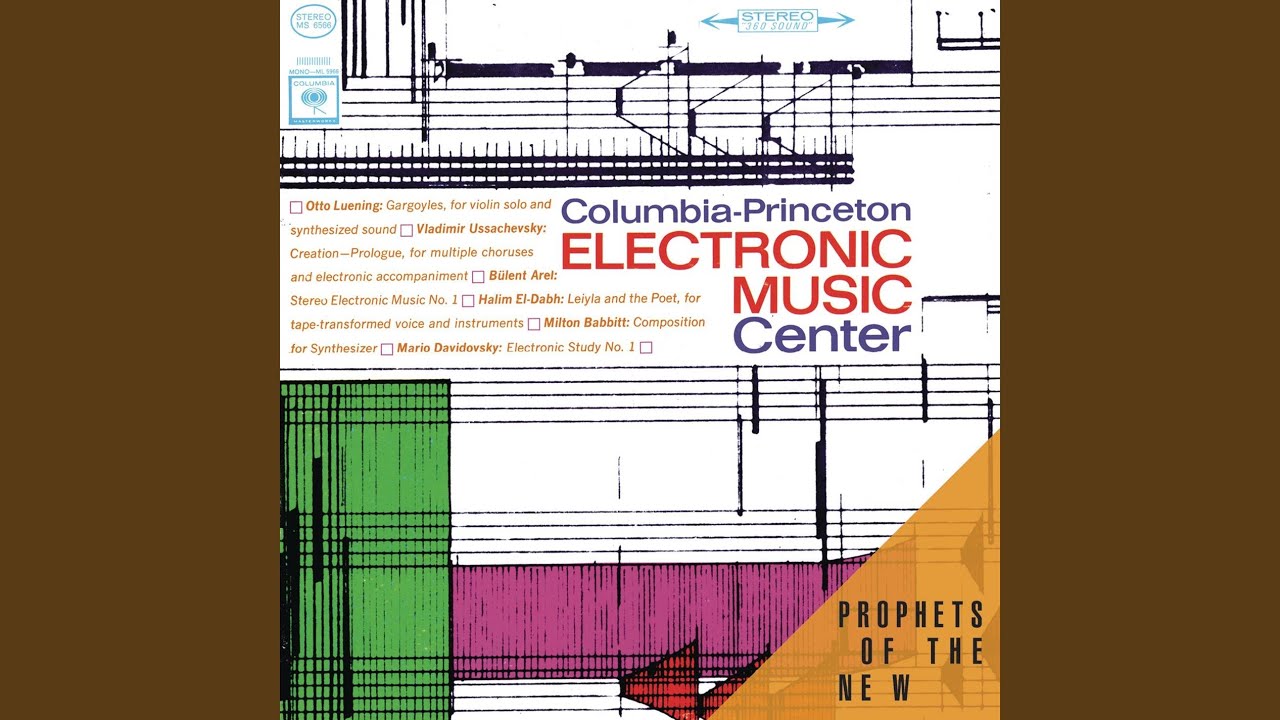
Composition for Synthesizer
Milton Babbit (1916-2011) utilized the same serial techniques to compose early electronic music, as exemplified in Composition for Synthesizer (1964).
Improvisation
Twelve-tone and serial music is, in contrast to improvisation, deterministic. As a result, twelve-tone composers often explored rhythm, dynamics, and form as the vehicles of artistic expression. Schoenberg provides an analysis of musical form in Fundamentals of Musical Composition that places less emphasis on harmonic structure and more on the development of motifs into phrases and forms. As a result, his presentation of musical form provides an effective framework for improvisation in the imprecise harmonic language discussed in the previous video.
ITT we will be applying concepts of music theory and open-source technology towards improvisational performance, recording, and broadcasting.
 Library
 Audio recordings in
  Live streams are hosted on Owncast and archived on MinIO.
 Home studio specs
 Gibson Les Paul Standard
 Roland FP-30
 Sterling Audio ST51
 AudioBox USB
 Dell Inspiron 3670

 Feedback on this video would be greatly appreciated! I am aware that the keyboard volume is too low, but I will also inform the content of subsequent lessons based on any questions or comments I receive.
 Also, feel free to share techniques of your own for bridging the gap between theory and performance during improvisation. This thread can be a collaborative discussion for new and experienced musicians alike!