ITT I am documenting a process for producing high purity ethanol (~95%) through distillation of fermented sugar solution. The first entry is a wiki page outlining the current standard recipe. Experiments and developments can be found in the subsequent thread, where readers are also invited to ask questions and share experience.
This post contains affiliate links. This site receives commissions upon sales generated from such links. Thank you for your support!
Sanitization
Ingredients
15ml Five Star Star San Acid Sanitizer
2.5G Tap Water
Procedure
15ml of sanitizer is mixed with 2.5G of tap water.
All utensils and apparatuses are soaked in the solution for at least one minute.
The raw sugar wash is filtered to remove solid debris.
750ml of wash is added to a 1000ml round bottom flask sitting in a heat mantle.
Vapors from the heated wash rise through a fractional column.
The temperature of the vapors is monitored at the top of the fractional column.
Vapors return to liquid as they pass through a condenser column, which is actively cooled using an external water pump.
Condensed vapors are collected in a flask until the temperature measured at step four rises above the boiling point of ethanol (~78°C).
Result
Alcohol forms an azeotrope with water at a concentration of ~95% by mass. A higher purity cannot, therefore, be achieved through fractional distillation.
While it is still too early to comment on the recipe as a whole, I did run into a few problems with this procedure that could be mitigated with some additional preparation. First of all, it was difficult to stir the mixture once combined in the jug. A stirring utensil would be very helpful. The complete solution was too heavy to weigh on my scale, so having the water measured prior to mixing would have been helpful. Further, it may have been advantageous to activate the yeast in a separate container prior to adding it to the mixture. Despite these issues, the solution appears to have begun bubbling. I will update this thread with results throughout the fermentation process, and I will host another live stream to show the distillation process.
Quick update after 24 hours: the mixture has developed a thin layer of foam on the surface and is slowly bubbling. There is a layer of undissolved sugar on the bottom of the jug, and yeast particles have congregated at the top but remain suspended throughout. I will post any significant updates over the next two weeks.
Another update: the mixture is now bubbling vigorously and has begun changing from a dark brown to a lighter yellow-brown from the top down. About one fourth of the mixture had turned this lighter color last night, which has now increased to three fourths. There appears to be less undissolved sugar at the bottom of the vessel.
I like where this is headed. I’ve had a bit of experience with both home brewing and table-top distilling. If I understand correctly the end product is not intended for human consumption.
Some general observations:
A great start with sanitizing your equipment! Any number of pathogens can quickly turn your wash sour, not the least being Acetobacter.
Be willing to boil the “distilled” water. Some commercial sources of distilled water are merely reverse-osmosis water mixed with some portion of proper distilled water, and as such, can also contain the smaller types of bacteria. (Funny how some corporations prefer profit over truth.) Much easier to dissolve sugar with hot water than cold.
Beyond a concentration of 1:5 sugar to water the yeast may struggle to initiate fermentation. A concentration of 250g sugar per 1 liter water is typically considered to be the toxicity level to yeast (osmotic pressure makes yeast die). That being said, perhaps newer strains of distiller’s yeast are hardier and can take the stress.
Since the title is “Ethanol Production and Distillation” please keep in mind that some methanol will be produced by the process as a whole. Have a plan for the separation of the methanol fraction from the ethanol fraction.
In an ideal universe the stoichiometry C₆H₁₂O₆ → 2 C₂H₅OH + 2 CO₂ means that 1kg sugar results in 511.55g of ethanol. You’ll be fortunate to get around 480g to 485g (in the 3 liters of water). If this were meant as a potable product that would be about 16% alcohol by weight! Heady stuff indeed.
At the risk of getting ahead of your process I am curious about the type of distiller you will be using once the fermentation and filtering are complete? I’ve seen a wide range of set-ups. I’m certain Nile Red sets a high bar.
This post contains affiliate links. This site receives commissions upon sales generated from such links. Thank you for your support!
Excellent! I found myself wondering if you might. I’d love to hear some of your recipes.
I’m inclined to taste a few drops of the sugar wash (it smells wonderful!), but you are correct - I do not intend to drink neither the sugar wash nor the distilled products. I will be using this as a solvent.
Would this be indicated on the label? The sugar seems to have completely dissolved at this point, which is interesting, but I think boiling the water first is just a good idea all around (of course, time would need to be given for it to cool before adding yeast). Since my scale was not able to measure beyond 2.5Kg, I had also intended to measure the water more precisely in a beaker. I’ll have to think through the full procedure before the next attempt.
I had always heard about moonshine causing blindness, but I didn’t realize this was the reason. Very interesting. Fortunately, this is actually quite exciting for my intended use case. It will be much easier to explain in a video where I can point to the different parts of the setup, but I will be using a fractional column. This one, to be specific:
Saving the technical explanation for the live stream, Methanol boils at 64.7C while Ethanol boils at 78.2C. Methanol will boil over first and I should be able to collect it separately. I was hoping the two chemicals would have different colored flames, allowing for a secondary confirmation of their separation, but unfortunately they seem too similar for this to be a conclusive test. I’m open to suggestions!
I was good at this in high school, but I definitely need to watch a refresher video on stoichiometry. I’ll be updating the wiki post with the final yeild!
A wee dram will do no harm.
My experiments were for the production of a potable product but the science is the same regardless of the end use.
Not necessarily. Is there a “Nutrition Facts” panel on the bottle? Any quantity of Sodium or Calcium is a dead give away that it’s not completely distilled. But in any case both Canadian and American (FDA) food and drug safety regulations do not prohibit the labeling of reverse osmosis water as “distilled” provided that it contains some quantity of distilled water. Just boil whatever you use first – for good measure.
No doubt you’ve read the “Tourists in (foreign place) die/are blinded by tainted alcohol” news articles. Methanol contamination is the main reason. Greed, laziness, or stupidity (pick just one!) means they don’t filter the wash and/or “cut the head and tail”. Always collect and discard the foreshot , head, and tail for a purer and safer distillate.
Filtering the wash is important because heating polysaccharides (chtin from yeast and cellulose from plant matter) in the absence of oxygen readily produces methanol (foreshot) along with acetone, aldehydes, (the head) and other heavy alcohols (the tail).
Dang, you can get anything from Amazon these days. Seeing this my first instinct would be to heat in a water bath on an electric hot plate to dial in the temperature. I quite look forward to seeing your process.
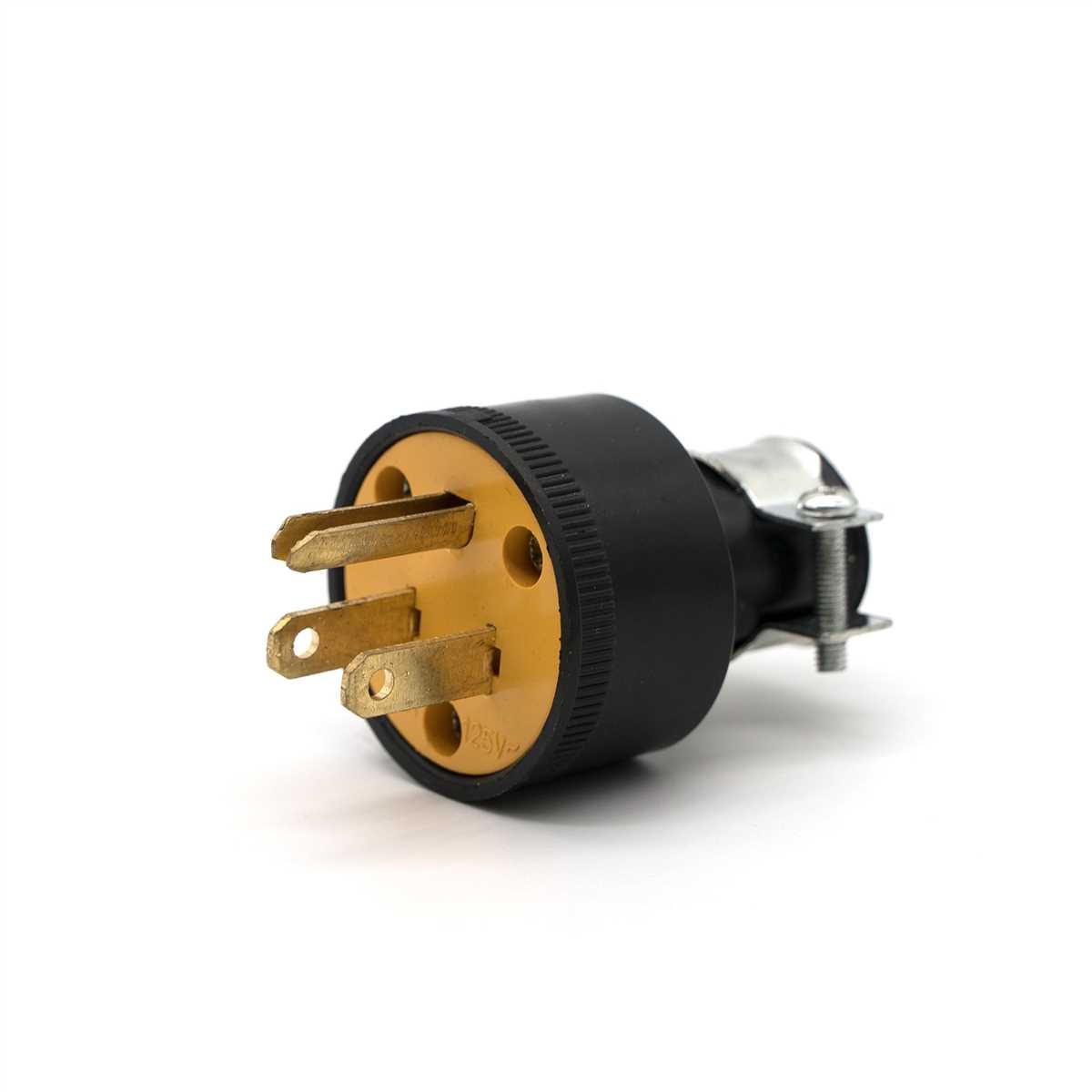
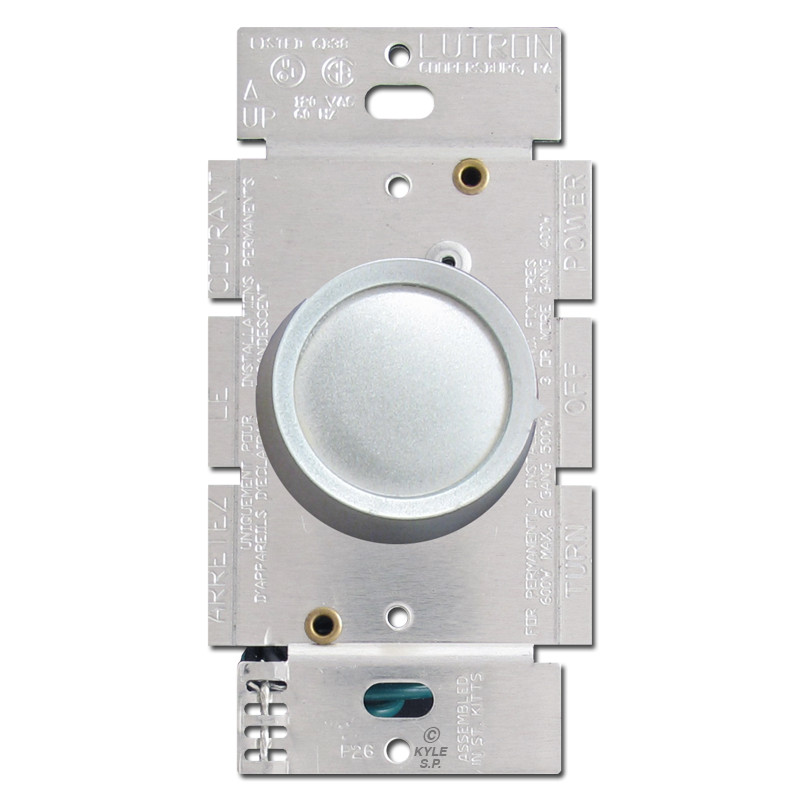
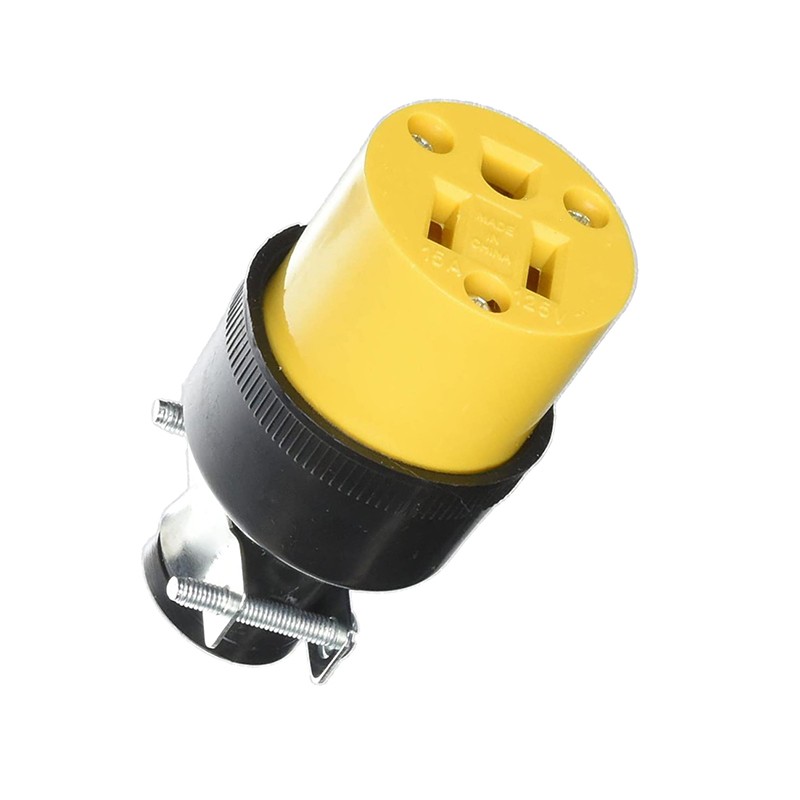
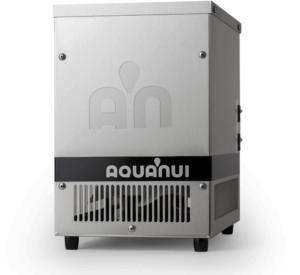
My experimental equipment ended up looking like this:
A grounded wall plug wired to an appropriately power rated rotary dimmer switch wired to grounded female receiver plug. Plug the water distiller into that. Heat of the distiller is proportional to the current set by the (variable resistance of the) dimmer switch. You can easily mark on the switch a lower current (ie: temperature) to collect the foreshot and a slightly higher current for the main process. You just have to test various levels and timings. I sure wish I had my infrared thermometer back then, but I made do with a meat thermometer!
After a week and two days fermenting, this live stream covers the beginnings of the filtration step in this distillation process. This step is not strictly necessary, as the impurities that get removed through filtration would also be left behind during a distillation; however, I want to attempt to recycle the yeast, so I intend to collect and dehydrate these impurities for future experiments. I had actually intended to do the full distillation over the course of this stream, but the filtration turned out to be much slower than anticipated, so only the beginnings of that phase were covered and the distillation will be done in a separate stream. For that step, I intend to do two distillations: the first to extract both methanol and ethanol and the second to separate those two distillates. This will allow me to empty and refill the boiling vessel without disassembling the entire apparatus. This video is basically two hours of liquid dripping through a coffee filter - but I had a fun time talking to @ThisNurseKills and @LogalDeveloper while watching the steady droplets.
After several days of filtering and a subsequent few sitting on the shelf, it is finally time to distill the sugar wash. In this live stream, I explain the distillation apparatus and begin boiling 1000ml of our swill. I was expecting to see the mixture boil at 64.7C, then 78.4C for methanol and ethanol respectively; however, the actual measured temperature varied considerably and only reached these targets briefly. By the end of the stream, the temperature was steady at about 90C. The process was halted once the temperature exceeded this point. We tried to account for my altitude (188m), but found this would not sufficiently explain the significant difference in expected and measured temperatures. Even so, a clear, sweet-smelling distillate was collected through the apparatus. This product will be distilled further to separate methanol from ethanol once all of the initial swill has been processed. Much like the filtration stage, this will be a long process, so the stream ends before the completion of the first batch and I will continue the process on my own. Once all of the swill has been processed, I will live stream the second distillation.
In this live stream, I am attempting to distill the distilled swill produced in last week’s video. I made several mistakes in this attempt that actually made this a fairly dangerous procedure. Namely, the flask in the heating mantle was too full, which caused the apparatus to flash boil and spray hot ethanol out of the apparatus. Very exciting. After a few attempts, I decided to call the stream and resume this step another time when I can boil the diswill in two stages to prevent boiling over. Though we didn’t make much progress, I will be able to attempt this again later this week - hopefully with less explosive results.
At long last, we have finally arrived at the end stage of this first attempt at ethanol production and distillation. In this second distillation step, we calculated that we have achieved about 64% ethanol by mass in our end product. This is far from the 95% that is achievable through fractional distillation, but I will have to improve upon the process in future iterations of the project. Fortunately, the concentration achieved here was enough to take a flame, giving me hope that we may be able to power an internal combustion engine with homemade ethanol. That project will have to be for another day, and I am satisfied with having achieved a 64% concentration through this attempt as a baseline from which to improve. The last step for this run will be updating the original wiki post to reflect what has been learned through this process.
ITT I am documenting a process for producing high purity ethanol (~95%) through distillation of fermented sugar solution. The first entry is a wiki page outlining the current standard recipe. Experiments and developments can be found in the subsequent thread, where readers are also invited to ask questions and share experience.
This post contains affiliate links. This site receives commissions upon sales generated from such links. Thank you for your support!